I love lemon. If I could only eat two flavors for the rest of my life it would be lemon and garlic. Just to be clear there is no garlic in this cake. But my third favorite flavor, thyme, might make an appearance in future iterations. Or maybe lavender and gin…but I digress. Today is kind of a dreary day, cloudy with sprinkles of rain at all times, which I believe they call “English weather” so an english lemon cake to have with tea seems like a perfect idea for today. And while today’s dreary weather in Houston is still in the 70s, I’m sure this will be even more appropriate in northern climates where March is dreary and also in the 40s and maybe you haven’t seen the sun in months (I’m looking at you Seattle) so this could be a nice little ray of sunshine and citrus.

Original Recipe
Ingredients
- 1 ⅓ cup sugar
- 1 scant cup butter, softened
- 2 eggs
- 1 ½ cups flour
- 1/2 teaspoon salt
- 1 teaspoon baking powder
- ½ cup milk
- Juice of 1 large lemon and grated rind of 1½ lemon
Instructions
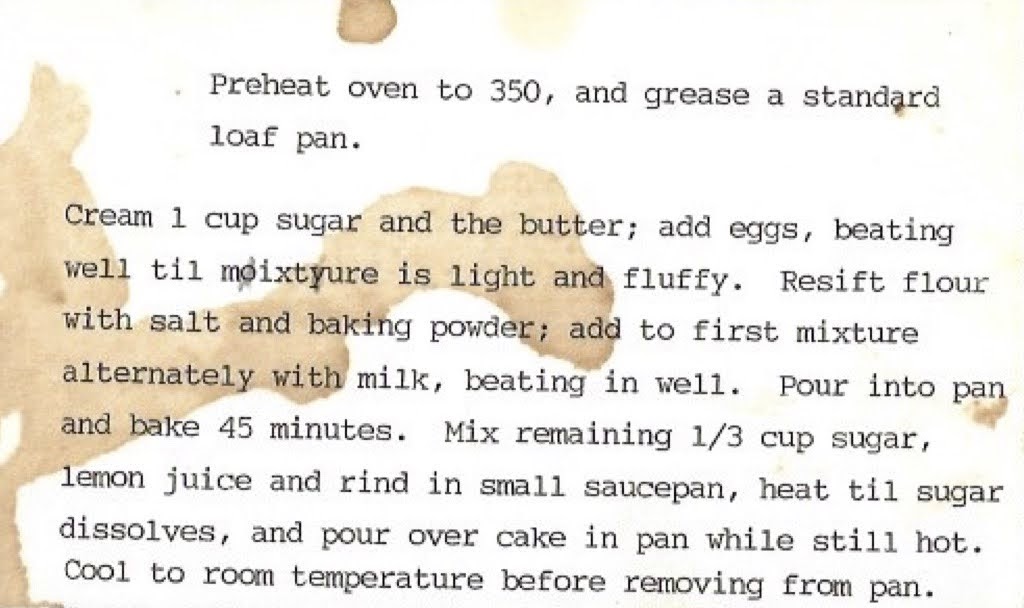
Preheat oven to 350, and grease a standard loaf pan.
Cream 1 cup sugar and the butter; add eggs, beating well til mixture is light and fluffy. Resift flour with salt and baking powder; add to first mixture alternately with milk, beating in well. Pour into pan and bake 45 minutes. Mix remaining ⅓ cup sugar, lemon juice and rind in small saucepan, heat til sugar dissolves, and pour over cake in pan while still hot. Cool to room temperature before removing from pan.
I’m actually not going to make many changes to this recipe, besides some clean up and of course adding more lemon. And I’m not going to sift the flour. If I was making something where we were folding the flour into egg whites, something like a genoise or an angel food cake or anything French, sure, sift away, it’s necessary to add air to the flour. For anything where we’re beating the flour in and the rising agent is a bicarbonate I don’t think it’s necessary. Look at your flour, if it’s clumpy, go ahead and sift it, but recipes overuse the command to sift and I can tell you why.
Thoughts on Sifting

Until the advent of truly airtight containers and large scale mechanized processing and milling sifting was absolutely necessary. Moisture, bugs, husks and stems could all sneak into your flour and sifting was the only way to remove those impurities and nasty bits before baking or cooking. Everyone in a little house on the prairie was sifting. That flour was being carted in canvas bags across the country or was being milled on a small scale with water powered 1800s machinery. The refining step happened in the home. From 1819 (when the sifter that everyone still has in their home was invented, you know the one that genuinely looks like an antique no matter when it was made) until well into the 20th century sifting was a safety issue. And it remained in recipes because it wasn’t having a negative impact so why take it out? It was just an extra step but it was a step that everyone’s mother and grandmother swore by. Because they had bugs in their flour. As we moved into the era of standardized recipes and measurements, let’s call it the Betty Crocker era of the late 20th century, sifting was cited as being necessary for achieving the perfect standard cup of flour, since as we all have had drilled into us by now, scooping a cup of flour will compress it and change the measurement. This can also be avoided by either spooning the flour into your measuring cup and leveling it or what’s become kind of the standard of the day, measuring by weight. And honestly if theres a 5g difference in the amount of flour you use it won’t really make a difference. So unless you’re making a recipe where the rising agent is air and you need to maximize the air in the recipe or your flour is clumpy or exposed to the elements, you do not need to sift.
Reflections
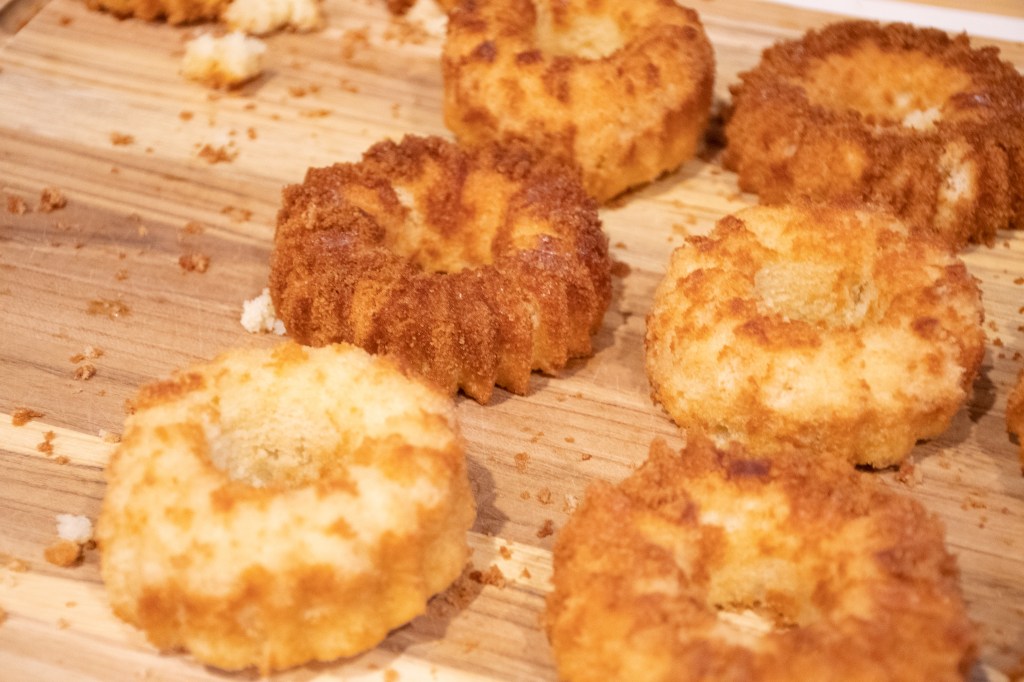
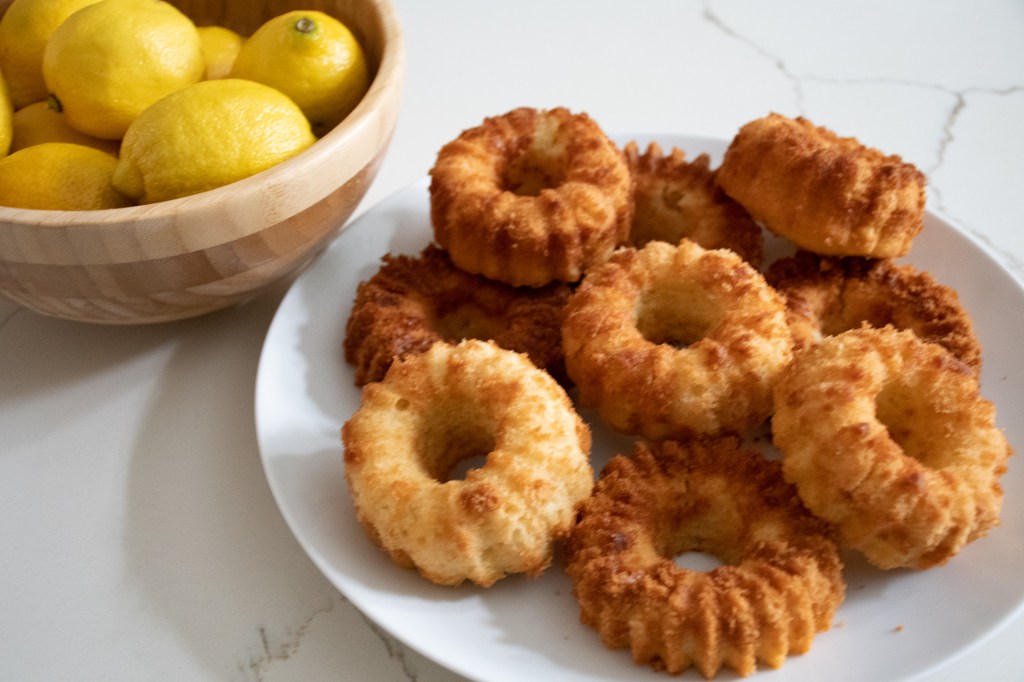
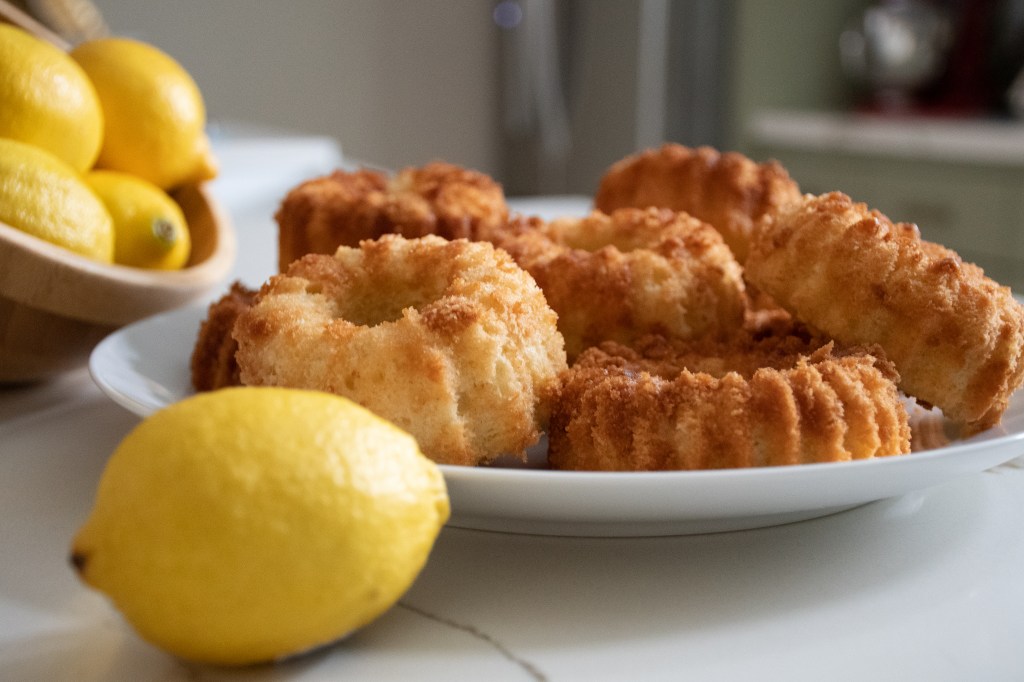
I like this as a loaf but it was also fun as mini bundt cakes. For the soak you can use lemon juice alone or bump it up with some limoncello or gin. And if you want a drizzle of icing on top whisk together powdered sugar and either lemon juice or an alcohol of your choice (and let it evaporate a touch before serving). The limoncello helps with the lemony flavor but the gin feels more English and adds a floral note to the lemon.
English Lemon Cake Recipe
Makes 1 loaf or 12 mini bundt cakes
Ingredients
- Zest and juice of 1 large lemon
- 1 ⅓ cups (267 g) granulated sugar, divided
- 1 ½ cups (180 g) AP flour
- 1 teaspoon (9 g) salt
- 1 teaspoon baking powder
- 1 cup (226 g) unsalted butter, softened
- 2 eggs
- ½ teaspoon vanilla extract
- ½ cup (114 g) milk
Instructions
- Add lemon zest to 1 cup of sugar and rub zest in until it is fully incorporated. Set aside for as long as possible while you set everything else up to infuse lemon oils into sugar.
- Preheat oven to 350℉ and grease a standard loaf pan or 12 mini bundt pans.
- In a small mixing bowl combine flour, salt and baking powder, whisk together.
- In the bowl of a stand mixer with the paddle attachment or in a large bowl with a hand mixer cream the lemon zest sugar and the butter. Add eggs and vanilla, beat until light and fluffy with no graininess.
- Alternate adding ⅓ of the dry ingredient mixture and milk to the butter, sugar and eggs, beating well after each addition. When all of the ingredients are mixed together scrape down sides of bowl and beat on high for 15-30 seconds to aerate and add structure.
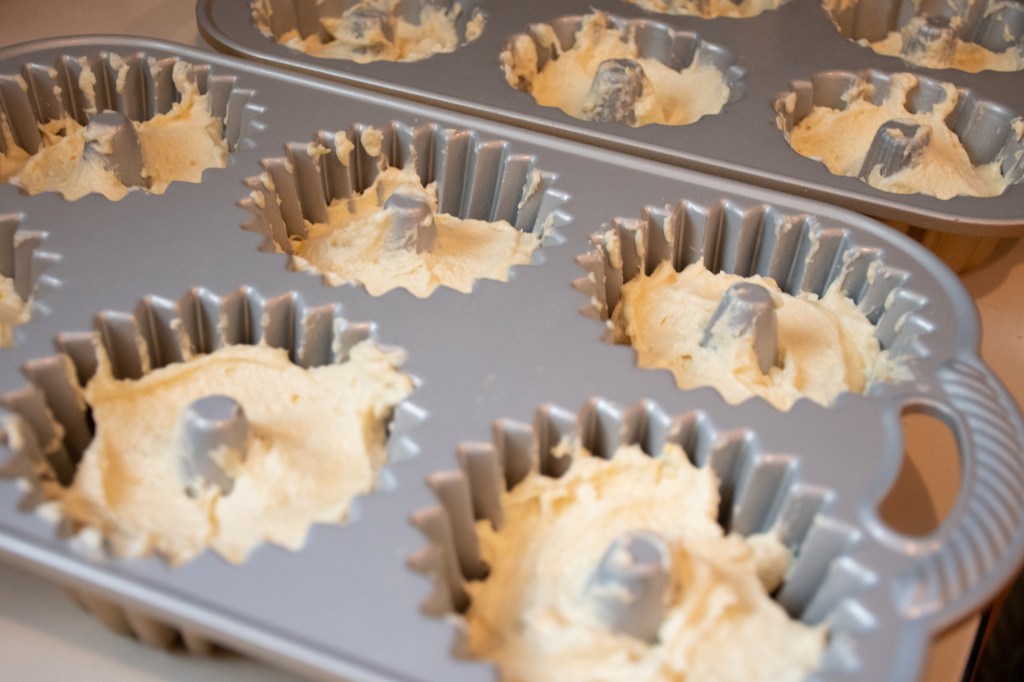
- Transfer into loaf pan or divide equally between mini bundt pans (it will not fill the pans). Bake the loaf for 45 minutes or the bundts for 23 minutes until lightly golden and springy when you touch the top.
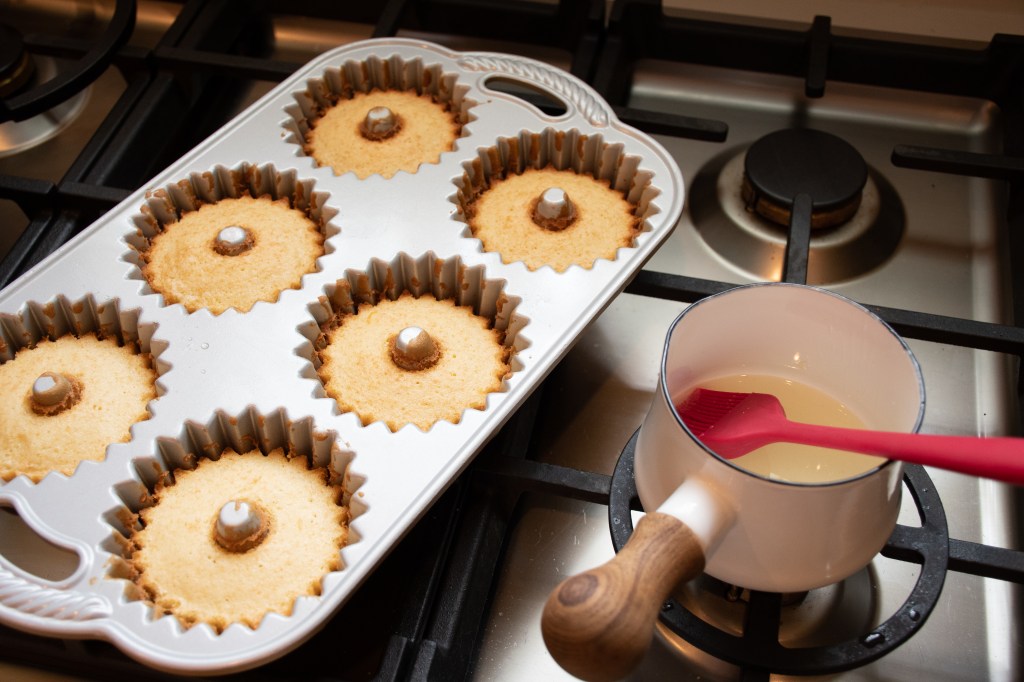
- In the last 10 minutes of the bake mix remaining ⅓ cup sugar and lemon juice in a small saucepan. Heat over over low heat, while whisking, until sugar dissolves to make a lemon syrup. Remove cakes from oven when finished baking and immediately brush with syrup while still hot. Use all of the syrup. Cool to room temperature before removing from pan.
 vtx kitchen